
摘要
随着比特币(BTC)在金融市场的地位不断巩固,BTCFi(比特币金融)领域正迅速成为加密货币创新的前沿。 BTCFi 涵盖一系列基于比特币的金融服务,包括借贷、质押、交易和衍生品。本报告深入研究了 BTCFi 的各个关键部分,研究了稳定币、借贷服务、质押服务、重新质押以及中心化和去中心化金融的交叉点。
报告首先介绍了 BTCFi 市场的规模和增长潜力,强调了机构投资者的参与如何促进市场的稳定和成熟。然后详细讨论了稳定币机制,包括不同类型的中心化和去中心化稳定币及其在 BTCFi 生态系统中的作用。在借贷领域,重点分析用户如何通过比特币借贷获得流动性,同时评估主要借贷平台和产品。
在质押服务领域,报告强调了Babylon等关键项目,这些项目利用比特币的安全性为其他权益证明(PoS)链提供质押服务,为比特币持有者创造收益机会。重新质押进一步释放了质押资产的流动性,为用户提供了额外的收入来源。
此外,报告还探讨了CeDeFi模式,将中心化金融的安全性与去中心化金融的灵活性结合起来,为用户提供更便捷的金融服务体验。
报告最后比较了不同资产类别的安全性、收益率和生态丰富度,揭示了BTCFi相对于加密货币金融其他领域的独特优势和潜在风险。随着BTCFi领域的不断发展,预计将吸引更多创新和资本流入,进一步巩固比特币在金融领域的领导地位。
关键词:BTCFi、稳定币、借贷、质押、重新质押、CeDeFi、比特币金融
BTCFi 行业概述
松鼠在冬眠前收集橡子,将它们存放在隐蔽且安全的地方;海盗将掠夺来的财宝埋在只有他们自己知道的土壤中;在当今社会,人们将现金存入定期账户,不仅追求每年低于3%的回报,还寻求一种安全感。现在假设你有一笔现金,你对加密货币市场持乐观态度,但希望规避重大风险,同时寻求投资回报率更高的资产,因此你选择了被称为“数字黄金”的BTC。您的目标是长期持有 BTC,而不是进行不必要的交易,因为价格波动可能会导致损失。此时,您需要一种机制,允许您利用您的 BTC,释放其流动性和价值,类似于以太坊上的 DeFi。这不仅使您能够长期持有资产,还可以通过多次利用资产的流动性来产生额外收入,因此值得探索无数可用的策略和项目。
BTCFi(比特币金融)充当移动比特币银行,涵盖一系列以比特币为中心的金融活动,包括借贷、质押、交易、期货和衍生品。根据 CryptoCompare 和 CoinGecko 的数据,BTCFi 市场在 2023 年达到约 100 亿美元。Defilama 预测,到 2030 年,BTCFi 市场将扩大到惊人的 1.2 万亿美元,涵盖了去中心化金融(DeFi)生态系统中的比特币锁定总价值(TVL)以及比特币相关金融产品和服务的市场规模。过去十年,BTCFi市场展现出巨大的增长潜力,吸引了灰度、贝莱德、摩根大通等机构越来越多的参与,这些机构都开始探索比特币和BTCFi市场。机构投资者的参与不仅带来大量资金流入,增强市场流动性和稳定性,也提高了市场的成熟度和规范性,为BTCFi提供了更高的认可度和信任度。
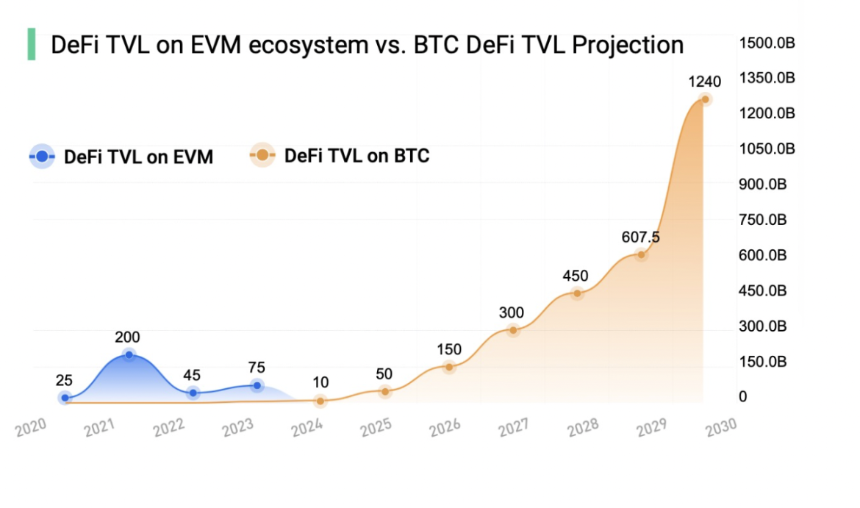
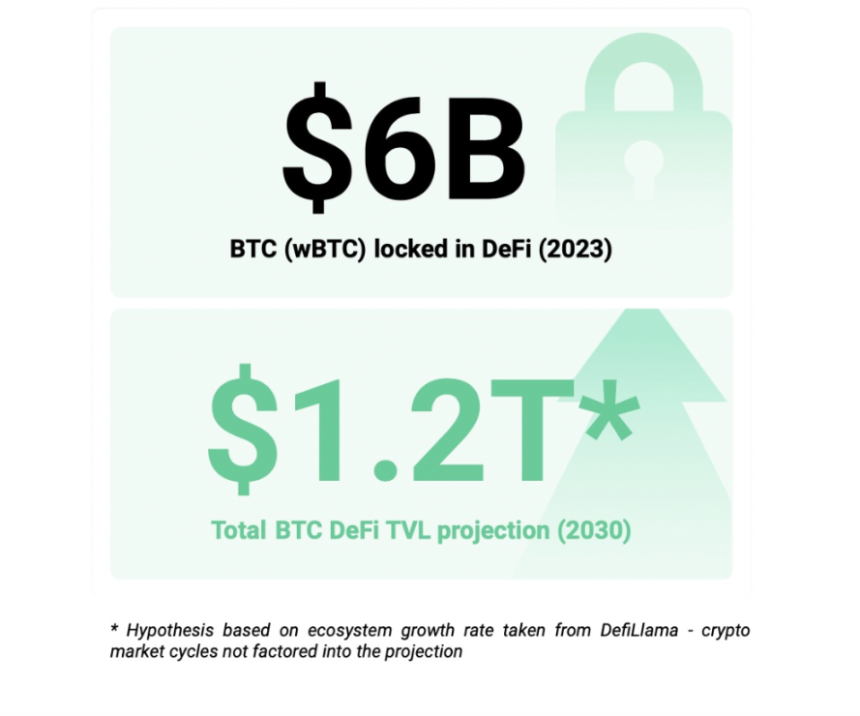
本文将深入探讨当前加密货币金融市场的几个趋势领域,包括比特币借贷(BTC Lending)、稳定币、质押服务、再质押服务以及中心化和去中心化金融的融合(即 CeDeFi)。通过对这些行业的详细介绍和分析,我们将探讨其运营机制、市场发展、关键平台和产品、风险管理策略以及未来趋势。
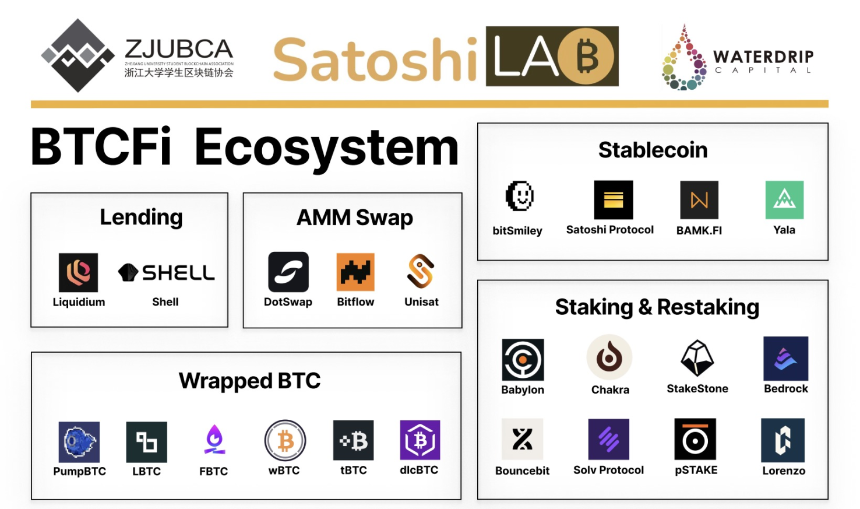
第二部分:BTCFi 行业细分
- 稳定币行业
简介
- 稳定币是旨在保持稳定价值的加密货币。它们通常与法定货币或其他有价值的资产挂钩,以减少价格波动。稳定币通过资产支持或算法供给调整实现价格稳定,广泛应用于交易、支付和跨境转账,让用户从区块链技术中受益,同时避免传统加密货币的极端波动性。
- 经济学中有一个“不可能三角”的概念:一个主权国家不可能同时实现固定汇率、资本自由流动和独立的货币政策。同样,在加密稳定币的背景下,也存在类似的不可能三角:价格稳定、去中心化和资本效率无法同时实现。
- 稳定币按照中心化程度和抵押品类型这两个相对直观的维度进行分类。目前主流稳定币中,根据中心化程度可分为中心化稳定币(以USDT、USDC、FDUSD为代表)和去中心化稳定币(以DAI、FRAX、USDe为代表)。按抵押品类型分类,可分为法币/实物抵押品、加密资产抵押品、抵押品不足等。
- 根据 DefiLlama 7 月 14 日的数据,稳定币总市值据报道为 1623.7 亿美元。从市值来看,USDT和USDC占据市场主导地位,其中USDT领先明显,占稳定币市场总量的69.23%。 DAI、USDe、FDUSD 紧随其后,市值排名第 3 至第 5 位。其余稳定币目前占总市值的比例不到 0.5%。
- 中心化稳定币大多是法币/实物抵押品,本质上代表由法币或其他有形资产支持的现实世界资产 (RWA)。例如,USDT和USDC与美元1:1挂钩,而PAXG和XAUT则与金价挂钩。相比之下,去中心化稳定币通常由加密资产支持或无抵押(或抵押不足)。 DAI 和 USDe 由加密资产支持,可以进一步细分为完全抵押或超额抵押类别。无抵押(或抵押不足)的稳定币通常被称为算法稳定币,以 FRAX 和以前的 UST 为代表。与中心化稳定币相比,去中心化稳定币市值较小,设计稍复杂,但也出现了一些出色的项目。在BTC生态中,需要关注去中心化的稳定币项目,因此下面将讨论这些稳定币的机制。
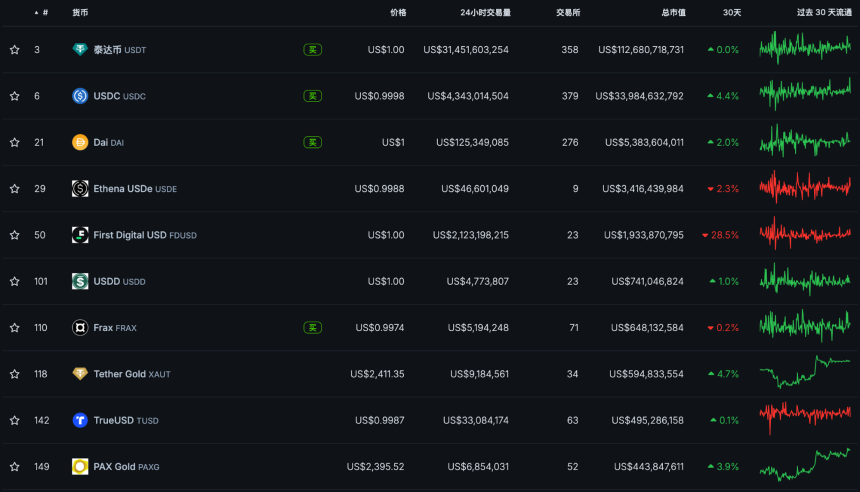
2024 年 7 月 14 日市值排名前 10 位的稳定币,来源:Coingecko
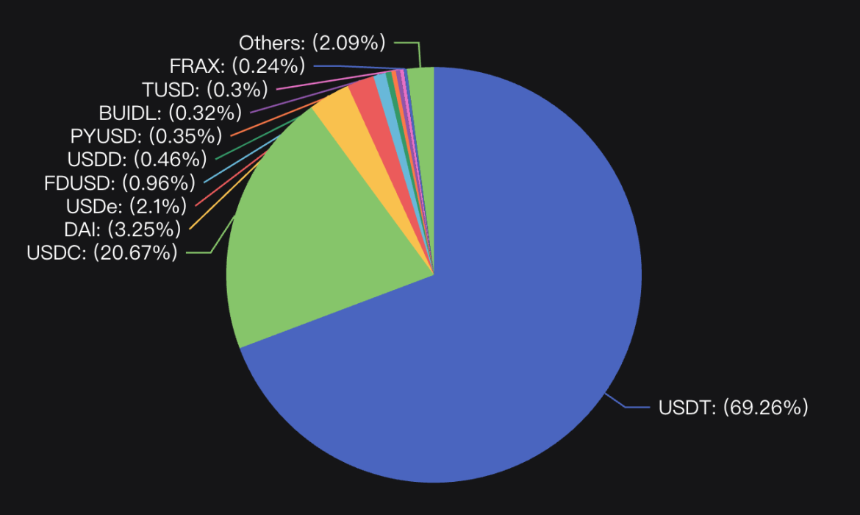
2024年7月14日市值排名前十的稳定币市场份额,来源:DefiLlama
去中心化稳定币机制
- 接下来我们将讨论以DAI(超额抵押)为代表的抵押债务头寸(CDP)机制和以Ethena(等额抵押)为代表的合约对冲机制。另外,还有算法稳定币机制,这里不再详述。
- CDP(抵押债务头寸)代表了一种去中心化金融机制,通过加密资产抵押来生成稳定币。它首先由 MakerDAO 首创,此后已应用于不同类别的各种 DeFi 和 NFTFi 项目。
- DAI 是 MakerDAO 创建的一种去中心化、超额抵押的稳定币,旨在与美元保持 1:1 的挂钩。其运作依赖于智能合约和去中心化自治组织(DAO)来维持其稳定性。核心机制包括超额抵押、债务抵押头寸(CDP)、清算机制以及治理代币 MKR 的作用。
- CDP 是 MakerDAO 系统中用于管理和控制 DAI 生成的关键机制。在 MakerDAO 中,CDP 现在被称为 Vault,但其核心功能和机制保持不变。 CDP/Vault的详细操作如下:
岛生成 DAI:用户将其加密资产(例如 ETH)存入 MakerDAO 的智能合约中以创建新的 CDP/Vault,然后根据抵押资产生成 DAI。生成的 DAI 代表用户债务的一部分,抵押品作为债务的担保。
二.超额抵押:为了防止清算,用户必须保持高于系统最低抵押率(例如 150%)。这意味着如果用户借入 100 DAI,他们必须锁定价值至少 150 DAI 的抵押品。
三.偿还/清算:用户需要偿还生成的 DAI 以及稳定费(以 MKR 计价)以赎回抵押品。如果用户未能维持足够的抵押品,其抵押品将被清算。
- Delta 代表衍生品价格相对于标的资产价格的百分比变化。例如,如果某个期权的 Delta 值为 0.5,则当标的资产价格上涨 1 美元时,期权价格预计将上涨 0.50 美元。 Delta中性头寸是一种通过持有一定数量的标的资产和衍生品来抵消价格风险的投资策略。目标是实现投资组合中的总体 Delta 值为零,从而在标的资产价格波动期间保持头寸价值。例如,对于一定数量的现货 ETH,人们可以购买等量的 ETH 空头永续合约。
Ethena 通过发行稳定币 USDe 将涉及 ETH 的 Delta 中性套利交易代币化,USDe 代表 Delta 中性头寸的价值。因此,他们的稳定币USDe有以下两个收入来源:- 质押奖励
- 基差和融资利率
- Ethena 通过对冲实现等额抵押和额外回报。
项目1:Bitsmiley协议
项目概况
- BTC 生态系统中的第一个原生稳定币项目。
- 2023 年 12 月 14 日,OKX Ventures 宣布对 BTC 网络上的稳定币协议 bitSmiley 进行战略投资,该协议允许用户通过超额抵押原生 BTC 来铸造稳定币 bitUSD。同时,bitSmiley涵盖借贷和衍生品协议,旨在为比特币提供新的金融生态系统。此前,bitSmiley 在 2023 年 11 月 ABCDE 和 OKX Ventures 联合主办的 BTC 黑客马拉松上被选为优质项目。
- 2024 年 1 月 28 日宣布完成首轮代币融资,由 OKX Ventures 和 ABCDE 领投,CMS Holdings、Satoshi Lab、Foresight Ventures、LK Venture、Silvermine Capital 以及来自 Delphi Digital 和 Particle Network 的个人跟投。 2月2日,蓝港互动旗下香港上市公司LK Venture在X平台宣布,通过比特币网络生态投资管理基金BTC NEXT参与bitSmiley首轮融资。 3 月 4 日,KuCoin Ventures 在推特上宣布战略投资比特币 DeFi 生态项目 bitSmiley。
运行机制
- bitSmiley 是一个基于 Fintegra 框架的比特币原生稳定币项目。它由去中心化超额抵押稳定币 bitUSD 和原生去信任借贷协议 (bitLending) 组成。 bitUSD基于bitRC-20(BRC-20的修改版本),并兼容BRC-20,并增加了Mint和Burn操作,以满足铸造和销毁稳定币的需求。
- 一月份,bitSmiley 推出了名为 bitRC-20 的新 DeFi 铭文协议。第一个资产 OG PASS NFT,也称为 bitDisc。 bitDisc分为金卡和黑卡两个级别,金卡分配给比特币OG和行业龙头,持有者总数不到40人。从2月4日开始,黑卡将通过白名单活动和BRC-20铭文格式的公开铸币活动向公众开放,这暂时导致了区块链的拥堵。随后,项目组表示将对不成功的铭文进行补偿。
- $bitUSD稳定币的运行机制:与$DAI类似。用户首先进行超额抵押,L2上的bitSmileyDAO在收到预言机信息并共识验证后,向BTC主网发布Mint bitRC-20消息。
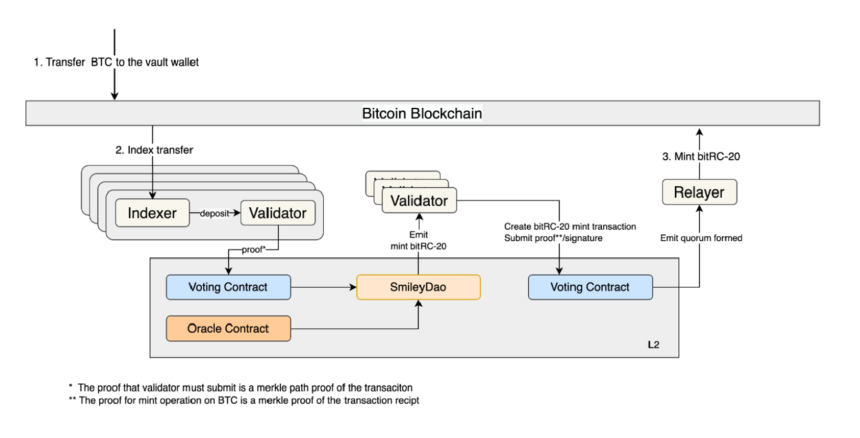
图片来源:https://github.com/bitSmiley-protocol/whitepaper/blob/main/BitSmiley_White_Paper.pdf
• 清算和赎回的逻辑与 MakerDAO 类似,清算采用荷兰式拍卖的形式。
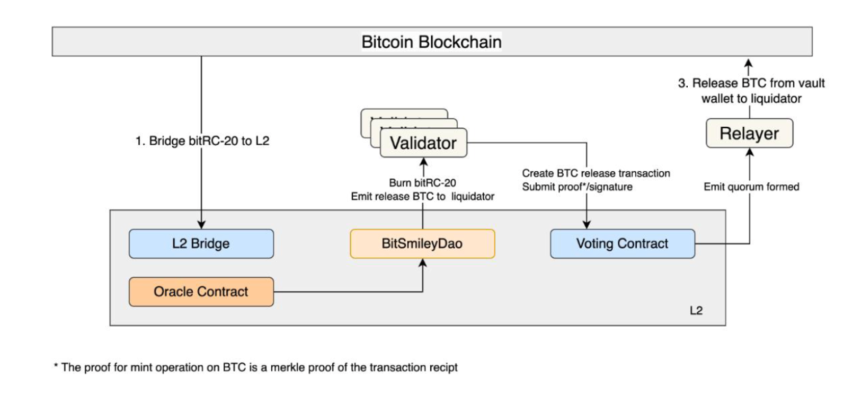
来源: https://github.com/bitSmiley-protocol/whitepaper/blob/main/BitSmiley_White_Paper.pdf
项目进展及参与机会
- BitSmiley 于 2024 年 5 月 1 日在 BitLayer 上推出 Alphanet。最高贷款价值 (LTV) 比率设定为 50%,该比率相对较低,以防止用户清算。随着bitUSD使用量的增加,项目团队将逐步提高LTV比例。
- BitSmiley 和 Merlin 社区将从 2024 年 5 月 15 日开始推出独家流动性激励补助,以增强 bitUSD 的流动性。详细规则如下:
- BitSmiley 将向 Merlin 社区成员提供高达 3,150,000 美元的 BIT 代币作为奖励。奖励将根据 Merlin 社区内的用户活动来解锁。第一季从2024年5月15日持续到2024年8月15日。
- 奖励机制:实现 bitUSD 铸造目标以及为 bitCow 上的 bitUSD 池增加流动性将获得奖励。流动性激励计划的详细信息如下图所示。流动性激励将根据用户在Merlin链上获得的bitPoints进行分配,积分越多的用户将获得越大的代币奖励。
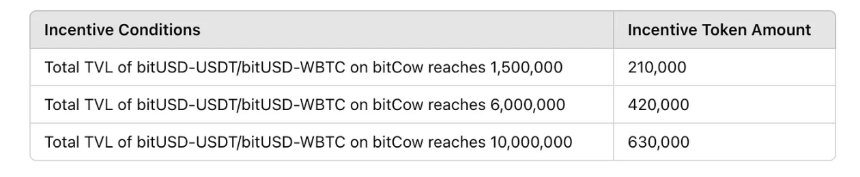
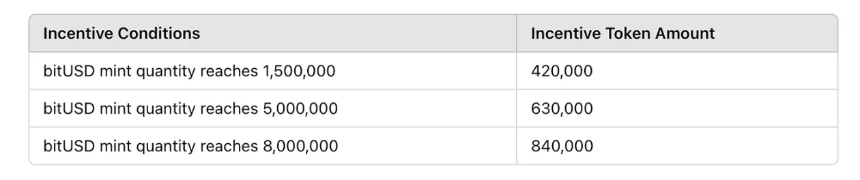
来源: https://medium.com/@bitsmiley/exclusive-liquidity-incentive-grant-details-bitsmiley-x-bitcow-alpha-net-on-merlin-chain-3f88c4ddb32d
项目2:Bamk.fi(NUSD)
项目概况
- Bamk.fi 协议是 NUSD(中本美元)的发行者,NUSD 是比特币 L1 上的合成美元。 NUSD 在 BRC 20-5 字节和 Runes 协议(当前等效)上流通。
运行机制
- 该项目分两个阶段设计。在第一阶段,NUSD 得到 USDe 1:1 的支持,允许 NUSD 持有者在每个区块中积累 BAMK(越早持有 NUSD,可以获得越多的 BAMK)。在第二阶段,NUSD 将得到 Delta 中性比特币头寸的全面支持,产生原生回报,被称为“比特币债券”,同时还可以基于 BTC 进行铸币和赎回。但目前官网提供的铸币方式是与USDT 1:1 铸币。
- 上述项目代币 BAMK 为符文形式,符文代码为 BAMK•OF•NAKAMOTO•DOLLAR,铸造于 2024 年 4 月 21 日。最大供应量为 21,000,000,000(210 亿)。其中,6.25% 的供应量已分配给所有 NUSD 持有者作为奖励。只需购买 NUSD 并将其存储在您的钱包中即可开始积累 BAMK 代币。 844,492 到 886,454 之间的每个区块(总共 41,972 个区块)将累积 31,250 BAMK,根据用户的 NUSD 持有量除以该区块高度的 NUSD TVL 总额按比例分配。
项目 3:雅拉实验室
项目概况
- Yala 利用其自建的模块化基础设施来促进其稳定币 $YU 在各个生态系统中自由、安全地流动,释放 BTC 的流动性,并向整个加密生态系统注入大量资金。
核心产品:
- 超额抵押稳定币 $YU:这种稳定币是通过比特币超额抵押生成的,其基础设施不仅基于比特币的原生协议,还可以在 EVM 和其他生态系统中自由、安全地部署。
- Metamint:$YU 的关键组件,允许用户在不同的生态系统中使用原生比特币方便地铸造 $YU,从而为这些生态系统注入比特币的流动性。
- 保险衍生品:在 DeFi 生态系统中提供全面的保险解决方案,为用户创造套利机会。
运行机制
- 为了方便用户在各个生态系统中使用 $YU,Metamint 解决方案推出了。用户可以使用本机比特币或 EVM 上的打包 BTC 作为抵押品,在任何目标链上轻松铸造 $YU。为了降低进入门槛,用户无需手动包装比特币;只需质押 BTC,后台就会自动生成在目标链上铸造 $YU 所需的打包 BTC。
- 通过这一流畅的资产转换解决方案,用户可以参与跨生态系统的 DeFi 协议,包括跨链流动性挖矿、质押和其他 DeFi 活动,开辟新的盈利机会。这种多链解决方案显着增强了用户获得更大回报的潜力。与集中利润的传统稳定币公司不同,Yala 将系统产生的费用返还给核心 $YU 持有者,确保用户直接从生态系统的增长中受益。
特点与优势
- 使用比特币作为主要抵押品,同时享受比特币网络的安全性和弹性。
- 用户可以用$YU参与各种 DeFi 活动来赚取回报。
- Yala 坚持以用户为中心的去中心化治理结构,将收入返还给核心用户。
项目更新和参与机会
雅拉通过与优秀项目的合作,在保证安全的同时,为用户提供各种赚钱机会。例如,通过与Babylon合作,Yala用户可以超额抵押BTC并铸造稳定币$YU,然后将这些抵押资产进一步质押在Babylon平台上以获得倍数收益。由于Babylon Stake协议不需要第三方托管,这种集成在保证用户资产安全的同时提高了收益。
Yala 的路线图重点是建立一个强大的流动性层,将比特币连接到市场上优秀的第 1 层和第 2 层生态系统。为了确保安全性和最佳的用户体验,Yala 将分阶段逐步上线主网和测试网:
- 测试网 V0:$YU 稳定币发行、专业模式和预言机。
- 测试网 V1:具有元收益率的 $YU 稳定币的轻型模式。
- V1 版本:保险模块和安全升级。
- V2 发布:治理框架启动。
随着测试网上线的临近,Yala 获得了领先基金的支持;具体机构和估值细节将在即将发布的融资消息中公布。
项目4:中本聪协议
项目概况
- 中本聪协议是 BTC 生态系统中第一个基于 BEVM 生态系统的 CDP 稳定币协议。
- 中本聪协议于 2024 年 3 月 26 日宣布完成种子轮融资,由 Web3Port 基金会和水滴资本领投,BEVM 基金会、Cogitent Venture、Statoshi Lab 等跟投。 2024年7月9日,宣布完成200万美元融资。
运行机制
- 该协议允许比特币持有者通过低利率释放其资产的流动性。中本聪协议是一个多链协议,其稳定币SAT具有高度兼容的多代币标准机制。目前它有两种代币:与美元挂钩的稳定币 SAT 和激励生态系统参与者的实用代币 OSHI。用户可以通过存入 BTC 及其他基于 BTC 的收益资产,以最低 110% 的抵押率铸造美元稳定币 $SAT,参与交易、流动性池、借贷等场景以获得收益。
- 在中本聪协议中,用户在建仓时必须保持至少 110% 的抵押率,以避免爆仓。例如,用户借贷100 SAT时,必须锁定价值超过110 SAT的BTC作为抵押品。如果 BTC 价格下跌,导致抵押品价值低于 110% 抵押率,协议将启动清算。
- 稳定池是中本聪协议的核心机制,旨在通过提供流动性来清偿清算头寸中的债务,确保系统的稳定性。当抵押不足的头寸(抵押率低于 110%)被清算时,SP 使用 SAT 来清偿债务并获取清算的 BTC 抵押品。参与稳定池的用户可以以折扣价购买这些 BTC 抵押品,而协议则使用清算获得的 SAT 来偿还债务。
项目更新和参与机会
- 最新公告表明,中本聪协议正在比特币主网上开发一种基于符文的稳定币。此外,通过与 Omini Network 等项目的合作,它旨在架起比特币和以太坊生态系统的桥梁,以实现“全链稳定币”解决方案的愿景。
- 目前,$OSHI 积分空投活动正在进行中,用户可以通过投票支持 BVB 计划中的项目、存入抵押品借入 $SAT、提供流动性以及推荐其他人来赚取积分。 $OSHI 稍后将根据积分进行分配。
项目5:BTU
项目概况
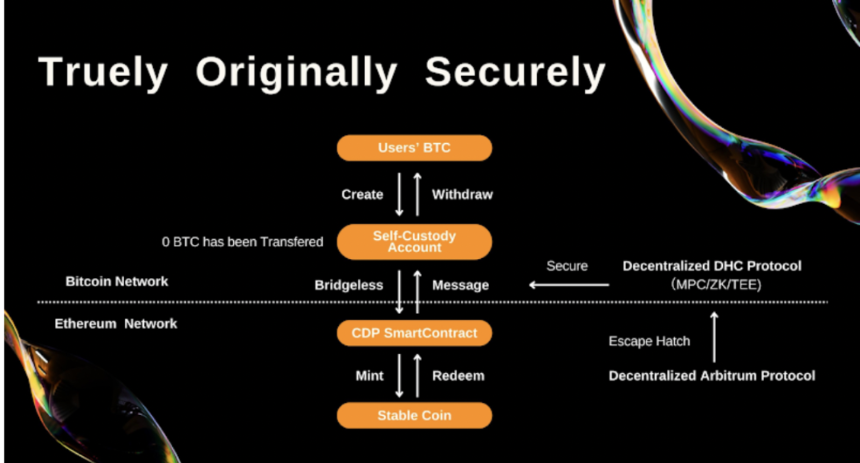
- BTU是比特币生态系统中第一个去中心化的稳定币项目,利用抵押债务头寸(CDP)模型,允许用户发行基于BTC资产的稳定币。 BTU 提供更安全、无需信任的稳定币解决方案,通过无缝的去中心化设计,解决现有 DeFi 生态系统中比特币持有者面临的流动性问题。
运行机制
- 比特币支持的稳定币:BTU 是一种完全由比特币支持的去中心化稳定币。用户可以通过将 BTC 锁定在 BTU 协议中来直接铸造稳定币,而无需将其资产转移到链下或放弃对其 BTC 的控制。这种设计确保了去中心化,同时避免了与传统中心化交易所或托管机构相关的风险。
- 无需跨链桥:与其他依赖跨链桥的解决方案不同,BTU 在比特币网络内完成所有操作,无需用户跨链转移 BTC。这样的设计消除了跨链过程中可能出现的潜在第三方风险,进一步增强了用户资产的安全性和可控性。
- 无需交易的资产证明:BTU 引入了一种无需交易即可证明 BTC 持有量的机制,允许用户在不移动比特币的情况下验证其资产。这种无需信任的无缝设计为去中心化金融生态系统中的用户提供了新的安全级别。
- 去中心化 CDP 模型:BTU 采用去中心化债务抵押头寸 (CDP) 模型,让用户完全自主决定何时发行或赎回 BTU 稳定币。协议设计确保用户的BTC只有在用户同意的情况下才能使用,保持了高度的去中心化和控制。
- 提高流动性和杠杆率:BTU 是第一个将 BTC 映射到比特币网络上的协议,提高了其流动性和杠杆率。通过这一机制,BTC持有者可以在不牺牲去中心化的情况下将其资产带入DeFi生态系统,从而提供更大的灵活性和投资机会。
- BTU 释放了比特币的流动性,为 BTC 持有者提供一种无需信任、去中心化的方式参与 DeFi 生态系统。传统上,BTC 持有者在尝试在不依赖中心化交易所或托管人的情况下参与 DeFi 或链上金融活动时面临着挑战。 BTU 为比特币持有者带来了新的可能性,使他们能够安全地发行稳定币、增强流动性并保持对其 BTC 的控制。
- 这种创新的去中心化稳定币解决方案不仅为 BTC 持有者提供了更多的金融选择,还为 DeFi 生态系统带来了新的增长潜力。通过释放比特币的流动性,BTU 可以促进新一代 DeFi 应用和协议的出现,进一步扩大 DeFi 市场的用户群和用例。
- BTU 基础设施的设计重点关注去中心化和安全性。由于 BTU 完全在比特币网络内运行,因此无需跨链桥或第三方托管人,从而显着降低中心化风险。 BTU 的去中心化模式可确保与现有比特币生态系统无缝集成,而不会引入额外的技术或安全风险。
项目进展及参与机会
- 该项目已获得水滴资本、方正基金、Radiance Ventures 的投资支持。
2.贷款行业
概述
- 比特币借贷(BTC Lending)是一种金融服务,允许用户使用比特币作为抵押品获得贷款或通过借出比特币赚取利息。借款人将比特币存入借贷平台,该平台根据比特币的价值提供贷款。借款人支付利息,而贷款人则获得回报。这种模式为比特币持有者提供了流动性,并为投资者提供了新的收入来源。
- BTC Lending 中的抵押贷款与传统抵押贷款类似。如果借款人违约,平台可以拍卖抵押的比特币来收回贷款。 BTC借贷平台通常实施以下风险管理措施:
- 抵押率和贷款价值比 (LTV):平台设定 LTV 阈值。例如,如果比特币的价值为 10,000 美元,则不超过 5,000 美元的贷款对应的 LTV 为 50%。这为比特币价格波动创造了缓冲。
- 补充抵押品和追加保证金通知:如果比特币价格下跌,借款人必须提供额外抵押品以降低 LTV。如果他们不这样做,平台可能会强制清算。
- 清算机制:当借款人无法满足追加保证金要求时,平台将出售部分或全部抵押的比特币来偿还贷款。
- 风险管理和保险:一些平台建立保险基金或与保险公司合作提供额外保障。
- 2013 年至 2017 年间,比特币作为一种新的资产类别逐渐获得认可。 Bitbond 和 BTCJam 等早期借贷平台出现,主要通过 P2P 模式进行借贷。 2018年至2019年,加密货币市场经历了快速增长,带动了BlockFi、Celsius Network、Nexo等更多平台的崛起。 DeFi概念促进了去中心化借贷平台的兴起。
- 2020 年至今,新冠肺炎 (COVID-19) 疫情引发全球金融市场动荡,引发人们对加密货币作为避险资产的关注。 The demand for BTC Lending surged, and the scale of lending expanded rapidly. Major platforms continually innovated, introducing various financial products and services, such as flash loans, liquidity mining, and cryptocurrency reward credit cards, attracting more users.
- The BTC Lending sector has become an important part of the cryptocurrency market, servicing major cryptocurrencies like Bitcoin and Ethereum, and lending products that include collateralized loans, deposit accounts, and unsecured loans. Platforms profit through interest rate spreads and fees. Popular platforms like Aave offer flash loans and liquidity mining rewards, MakerDAO provides the DAI Savings Rate (DSR), and Yala offers DeFi yields based on stablecoins. The next section will introduce popular products in the BTC Lending sector.
Project 1: Liquidium
Overview
- Liquidium is a P2P lending protocol operating on Bitcoin, enabling users to use native Ordinals and Runes assets as collateral for borrowing and lending native Bitcoin.
- On December 11, 2023, Liquidium completed a $1.25 million Pre-Seed funding round, with participation from Bitcoin Frontier Fund, Side Door Ventures, Actai Ventures, Sora Ventures, Spicy Capital, and UTXO Management.
- On July 18, 2024, Liquidium raised $2.75 million in a Seed funding round, led by Wise 3 Ventures, with participation from Portal Ventures, Asymmetric Capital, AGE Fund, and Newman Capital.
Operational Mechanism
- The platform completes Bitcoin lending in a secure and non-custodial manner using Partially Signed Bitcoin Transactions (PSBT) and Discreet Log Contracts (DLC) on Bitcoin L1. Currently, it supports lending for Ordinals and Runes assets (BRC-20 is in testing).
- Tokenomics: The LIQUIDIUM TOKEN in rune format was launched on July 22, 2024, with a total supply of 100 million. The initial airdrop has been completed. As of September 3, the market price of LIQUIDIUM TOKEN is approximately $0.168, with a market cap of $2 million.
- According to Geniidata, as of September 3, the total transaction volume on the protocol reached approximately 2,400 BTC, with the majority being Ordinals and a small portion being Runes assets. The peak transaction volume occurred in April-May, with an average daily trading volume of around 15-20 BTC for Ordinals assets. With the launch of Runes, there was a new peak in daily active users (DAU) and trading volume, followed by a gradual decline. In August and September, trading volume dropped to an average of 5-10 BTC per day.
Project 2: Shell Finance
Overview
- Shell Finance is a stablecoin protocol based on BTC L1 that supports using BTC, Ordinals NFTs, Runes, BRC-20, and ARC-20 assets as collateral to obtain $bitUSD.
Operational Mechanism
- Similar to Liquidium, it utilizes PSBT and DLC technology for native Bitcoin lending. PSBT allows for secure and collaborative transaction signing, while DLC enables conditional and trustless contract execution based on verified external data.
- Unlike Liquidium’s P2P model, Shell Finance adopts a Peer-to-Pool approach to maximize utilization.
- The testnet has yet to be launched.
3. Staking Sector
Overview
- Staking is commonly recognized for its secure and stable yield-generating characteristics. When users stake tokens, they typically receive certain access privileges, perks, or reward tokens over time in exchange for locking their coins, which can be withdrawn anytime and anywhere. Staking occurs at the network level and is entirely aimed at securing the network. Ethereum’s proof-of-stake (PoS) mechanism is the most typical example of staking, with over 565,000 validators holding the standard 32 ETH, which today is worth more than $32 billion. The assets staked are usually tied to DeFi liquidity, yield rewards, and governance rights. Tokens locked in a blockchain network or protocol yield returns, which are utilized to provide critical services to users.
- Currently, the concept of shared security brought by staking adds a new dimension to the modular sector, harnessing the potential of “digital gold and silver.” Narratively, it releases liquidity worth trillions of market cap and serves as a key core in the path to future scalability. Recent Bitcoin staking protocol Babylon and Ethereum restaking protocol EigenLayer, which secured significant funding of $70 million and $100 million respectively, clearly indicate that top VCs recognize the value of this sector.
- At this stage, the sector is mainly divided into two factions: 1. Layer 1 chains with sufficient security that function as rollup layers; 2. Creating an alternative with security comparable to Bitcoin/Ethereum but with better performance. For example, Celestia aims to create a secure, decentralized, and high-performance data availability (DA) layer through a pure DA functional architecture and low gas costs. The disadvantage of this approach is that it requires time to achieve a certain level of decentralization and lacks legitimacy. In contrast, newly emerging projects like Babylon and EigenLayer represent a more neutral stance. Their advantage lies in inheriting legitimacy and security while also granting the main chain assets greater application value—creating shared security services through PoS, leveraging the asset value of Bitcoin or Ethereum.
Project 1: Babylon
Overview
- Babylon is a layer 1 blockchain founded by Stanford University’s Professor David Tse. The project’s mission is to bring Bitcoin’s unparalleled security to all PoS blockchains without incurring any additional energy costs. The team consists of researchers from Stanford University, experienced developers, and seasoned business advisors.
- Babylon is a Bitcoin staking protocol, with its core component being a PoS public chain compatible with Cosmos IBC. It allows Bitcoin to be locked on the Bitcoin mainnet to provide security for other PoS consumer chains while earning staking rewards on the Babylon mainnet or PoS consumer chains. Babylon enables Bitcoin to leverage its unique security and decentralization features to economically secure other PoS chains, facilitating the rapid initiation of other projects.
Source: https://www.rootdata.com/zh/Projects/detail/Babylon?k=MjgwNQ%3D%3D
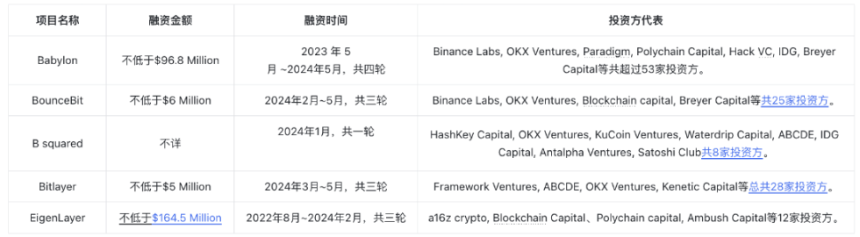
- The Babylon team consists of 32 technical personnel and advisors, showcasing strong technical capabilities. Among the advisors are Sunny Aggarwal, co-founder of Osmosis Lab, and Sreeram Kannan, founder of EigenLayer, who serves as a strategic advisor. As of June 1, 2024, Babylon has disclosed multiple rounds of funding, with a total amount exceeding $96.8 million. The following table illustrates that, compared to other Bitcoin Layer 2 projects, Babylon’s funding amount is relatively high, with numerous institutional backers.
Operational Mechanism
- In terms of operation, Babylon’s mechanism is aligned with Ethereum’s restaking protocol, EigenLayer. “Bitcoin + Babylon” can be seen as analogous to “Ethereum + EigenLayer.” However, since Bitcoin does not support smart contracts, Babylon has an additional step compared to EigenLayer, which is also the most challenging step: making non-stakable Bitcoin stakable before proceeding to restake it.
- Babylon leverages UTXOs to implement staking contracts, a process known as Remote Staking. This means that the security of BTC is transmitted to the PoS chain through an intermediary layer, while cleverly integrating existing opcodes. The specific steps to implement the contract can be broken down as follows:
a. Locking Funds
Users send funds to an address controlled by a multi-signature scheme. Using OP_CTV (OP_CHECKTEMPLATEVERIFY), which allows the creation of predefined transaction templates ensuring that transactions can only be executed under specific structures and conditions, the contract specifies that these funds can only be spent if certain conditions are met. Once the funds are locked, a new UTXO is generated to indicate that these funds have been staked.
b. Condition Verification
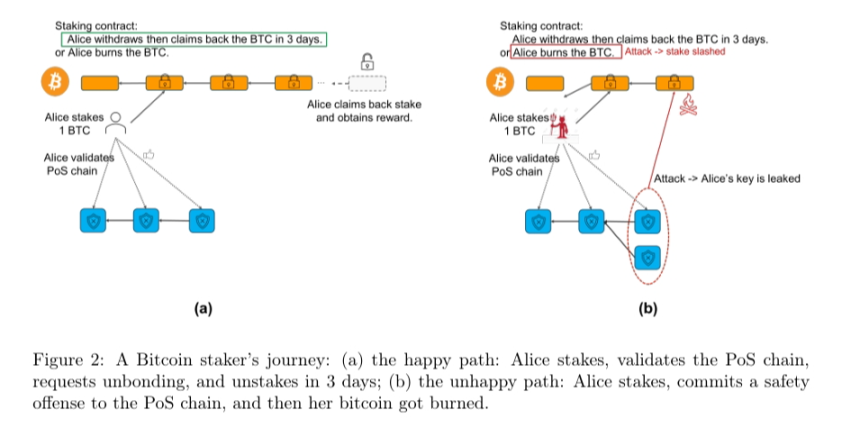
By invoking OP_CSV (OP_CHECKSEQUENCEVERIFY), which allows for the setting of a relative time lock based on the transaction’s sequence number, it ensures that the funds cannot be withdrawn for a specified period. When combined with OP_CTV mentioned above, it enables staking and unstaking (where the staker can spend the locked UTXO once the staking period is met), as well as slashing (where, in the event of malicious behavior by the staker, the UTXO is forcibly spent to a locked address and rendered unspendable, similar to a black hole address).
Source: https://docs.babylonchain.io/assets/files/btc_staking_litepaper-32bfea0c243773f0bfac63e148387aef.pdf
c. State Updates
Whenever users stake or withdraw their staked funds, the creation and spending of UTXOs come into play. New transaction outputs generate new UTXOs, while old UTXOs are marked as spent. This ensures that each transaction and flow of funds is accurately recorded on the blockchain, guaranteeing transparency and security.
d. Reward Distribution
Based on the amount staked and the duration of staking, the contract calculates the rewards owed and distributes them by generating new UTXOs. These rewards can be unlocked and spent after meeting specific conditions set in the script.
- The overall architecture of Babylon can be divided into three layers: Bitcoin (serving as a timestamp server), Babylon (a Cosmos Zone) as the intermediary layer, and the demand layer for PoS chains. Babylon refers to the latter two as the Control Plane (the Babylon itself) and the Data Plane (the various PoS consumption chains).
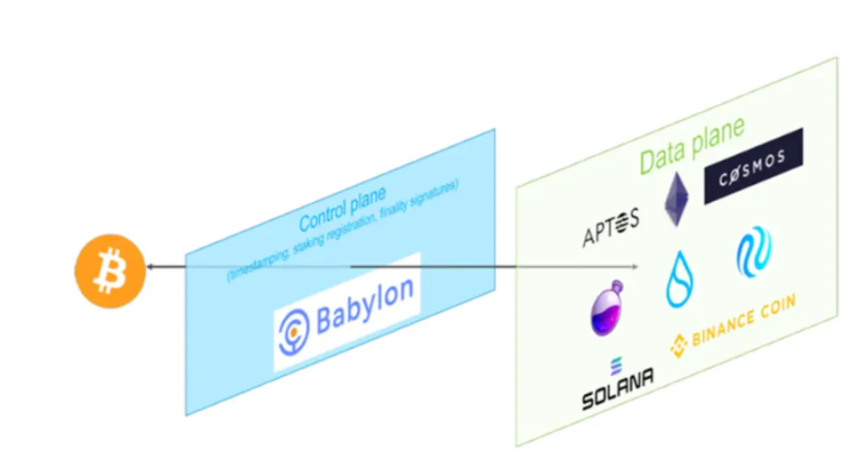
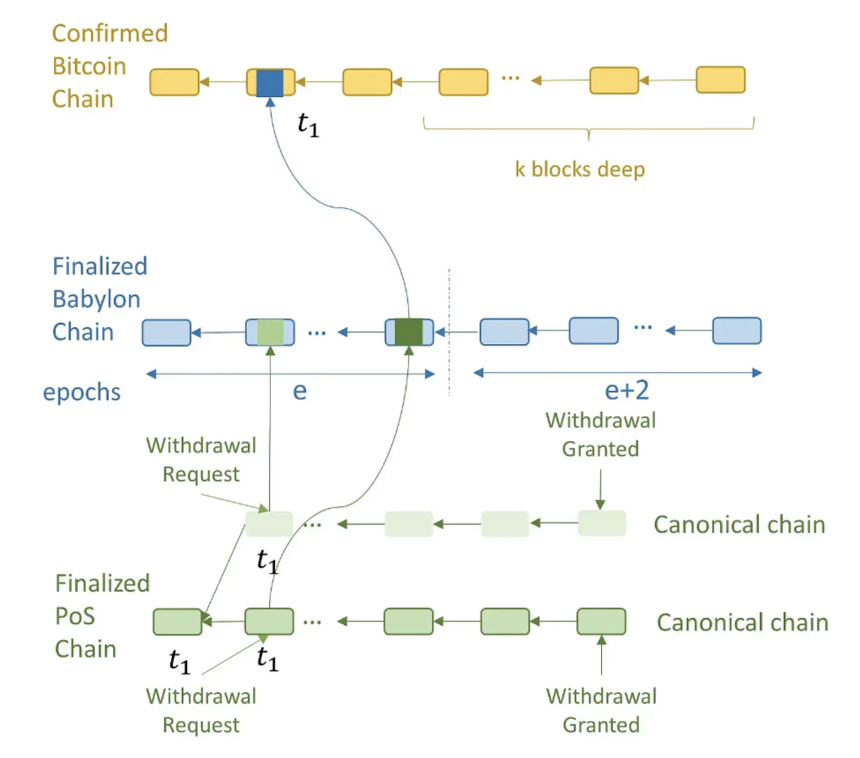
- Validators on each PoS chain download Babylon blocks and check whether their PoS checkpoints are included in the Bitcoin-validated Babylon blocks. This allows PoS chains to detect discrepancies, such as if Babylon validators create an unavailable block checked by Bitcoin and falsely claim the PoS checkpoints contained within that unavailable block.
- Consequently, there are slashing rules, meaning that if validators do not withdraw their stake upon detecting an attack, they can be slashed for having conflicting PoS blocks with double signatures. Malicious PoS validators may thus fork the PoS chain while allocating Bitcoin timestamps for blocks on the standardized PoS chain. In the view of later PoS clients, this will shift the standard PoS chain from the top chain to the bottom chain. Although this represents a successful security attack, it results in the slashing of the stakes of malicious PoS validators, as they have conflicting blocks with double signatures but have not yet withdrawn their staked assets.
Source: https://docs.babylonchain.io/assets/files/btc_staking_litepaper-32bfea0c243773f0bfac63e148387aef.pdf
Project Progress & Participation Opportunities
- In February 2023, Babylon launched its BTC timestamping testnet. In July, it achieved a BTC staking proof of concept (PoC) and plans to launch the BTC staking testnet in Q4.
- In Q2 of 2024, Babylon will go live on the Mainnet, and during Q3 and Q4 of 2024, it will introduce Data Availability, which is currently in testnet 4. Users participating in the testnet will receive project points as incentives, which can be exchanged for governance token airdrops once the Mainnet is launched.
- The Mainnet is expected to launch soon. As of August 1, 2024, Babylon has started partnerships with popular restaking projects such as Chakra, Bedrock, Solv Protocol, and pStake to initiate pre-staking processes. Users can already participate in Babylon’s pre-staking through these projects and receive corresponding shares, making it an excellent time to get involved. After the Mainnet launch, users will also be able to stake on the Mainnet and earn governance tokens, enjoying annualized returns from the staking network at any time.
- Restaking Sector
Introduction
- Building on staking, ETH introduced the concept of restaking for the first time. ReStaking allows liquid staked token assets to be used for staking with validators on other networks and blockchains, earning additional yields while enhancing the security and decentralization of the new networks. Through ReStaking, investors can achieve double returns from both the original network and the ReStaking network. Although ReStaking enables stakers to gain higher yields, it also carries risks related to smart contracts and fraudulent validator staking behaviors.
- In addition to accepting original assets, ReStaking networks also accept other assets such as LSD tokens and LP tokens, enhancing network security. This approach releases unlimited liquidity sources for the DeFi market while still generating real income for protocols and their users. Revenue for both ReStaking and standard networks comes from security rentals, validators, and fees generated by dApps, protocols, and layers. Participants staking on the network will receive a portion of the network’s revenue and may also gain inflation rewards in the form of native tokens.
- Many BTC holders stake their BTC in projects like Babylon and Bedrock to achieve considerable annual yields and governance tokens. Early participants can realize substantial returns and long-term benefits. However, their BTC loses other applications’ value when staked. So, how can new liquidity be released to add more value to their BTC? Since BTC liquidity can’t be increased, the focus shifts to releasing the liquidity from LSD obtained through staking. Users can engage in restaking the asset receipts acquired from staking BTC, earning fivefold returns: annual staking yields, governance tokens obtained from staking, annual restaking yields, and governance tokens obtained from restaking.
Project 1: Chakra
Overview
- Chakra is an innovative modular settlement infrastructure utilizing zero-knowledge proof technology to ensure trustless security and efficiency. By integrating decentralized Bitcoin liquidity, Chakra offers a more secure and seamless settlement experience. Users can easily stake Bitcoin with one click, leveraging Chakra’s advanced settlement network to participate in more liquidity yield opportunities, including LST/LRT projects within the Babylon ecosystem.
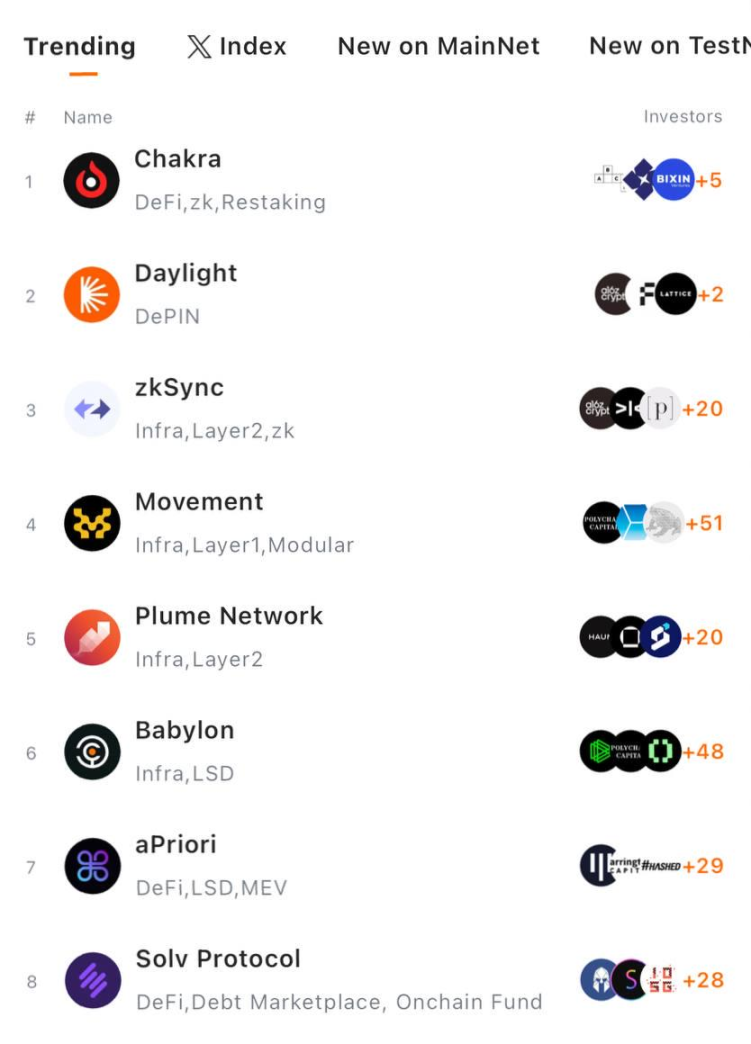
- Chakra is significantly supported by the Starknet ecosystem. In March 2024, it was officially announced that Chakra secured early investments from institutions such as StarkWare and CoinSummer, as well as numerous crypto whales and miners.
Operational Mechanism
- Chakra facilitates the free flow of BTC derivative assets between major public chains by providing a highly modular Bitcoin settlement network, injecting liquidity into DeFi protocols and addressing the liquidity and interoperability issues of Bitcoin within the current blockchain ecosystem. At the same time, Chakra helps Layer 2 solutions, decentralized exchanges (DEXs), and DeFi protocols bypass the complexities of building Bitcoin settlement infrastructure, avoiding resource waste and security risks associated with redundant settlement system development.
- By leveraging the finality provided by the Babylon network, Chakra enhances economic security and prevents settlement errors caused by consensus attacks. Chakra efficiently aggregates zero-knowledge proofs for Layer 2 state and liquidity settlements, ensuring frictionless cross-chain circulation of Bitcoin assets. The Parallel VM designed and implemented by the Chakra team optimizes performance through multithreading, achieving over 5,000 transactions per second (TPS) with 4 threads, and even reaching up to 100,000 TPS in a high-configuration environment with 64 threads.
Project Progress
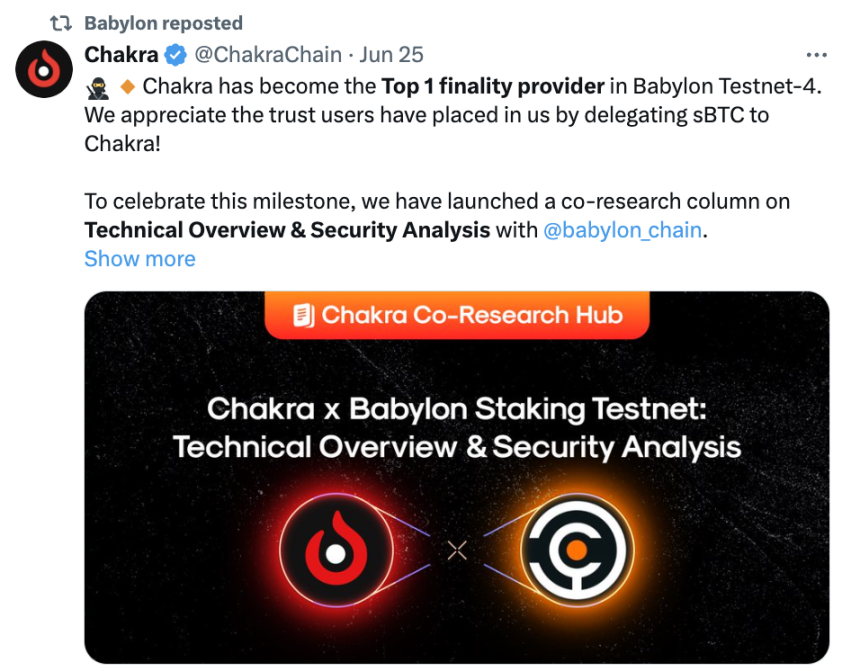
- In May, Chakra launched its Devnet, encouraging developers to co-build an application ecosystem and establishing strong connections with multiple local communities within Starknet. Subsequent initiatives will include a series of developer education activities and Devnet incentives, supported by Starknet. In June, during the simultaneous launch of the testing network activities for Chakra and Babylon, Chakra consistently ranked as the top Finality Provider across the Babylon ecosystem, contributing 41% of the staking users on the entire network.
- From August 1 to August 7, 2024, Chakra launched a pre-staking campaign in collaboration with the Binance Web3 wallet. Participants were offered dual rewards, including potential gains from Babylon and ChakraPrana, with future opportunities to earn rewards in other ecological tokens within the settlement system. The campaign has concluded, with a total of 48,767 users participating in the staking.
Project 2: Bedrock
Overview
- Bedrock is a multi-asset liquidity restaking protocol supported by a non-custodial solution designed in partnership with RockX. Bedrock leverages its universal standards to unlock liquidity and maximize value for PoS tokens (such as ETH and IOTX) and existing liquid staking tokens (referred to as uniETH and uniIOTX).
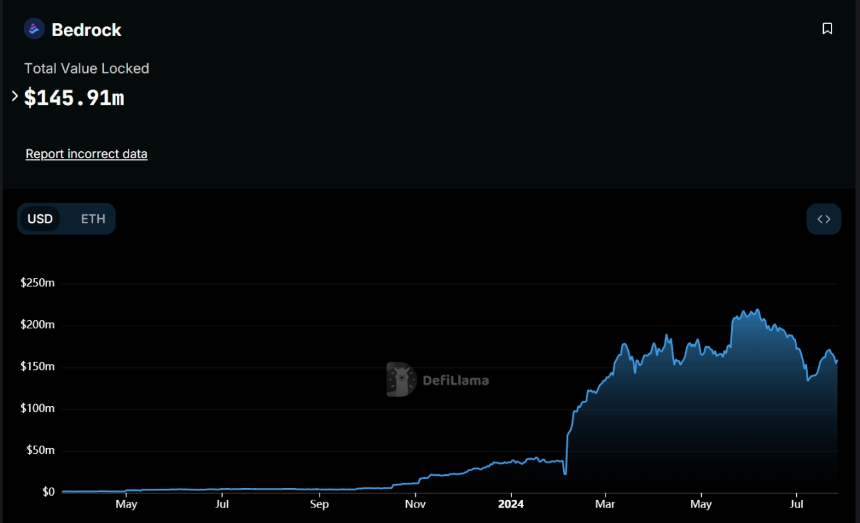
- Bedrock provides users with institutional-level services, surpassing a total staking value of $200 million as of May 2, and has built the first liquid staking Bitcoin (uniBTC) on Babylon.
The TVL to date:
Source: https://defillama.com/protocol/bedrock#information
• TVL exceeded US$200 million at its peak, and there are signs of rising again. In addition, the project has also carried out in-depth cooperation with ecological protocols such as Pendle, Karak, Celer, zkLink, etc., highlighting its influence in the DeFi ecosystem.
Source: https://www.rootdata.com/zh/Projects/detail/Bedrock?k=MTI1OTM%3D
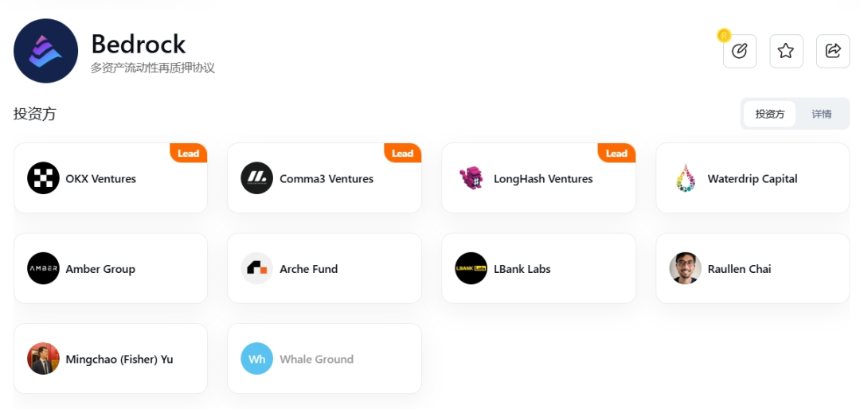
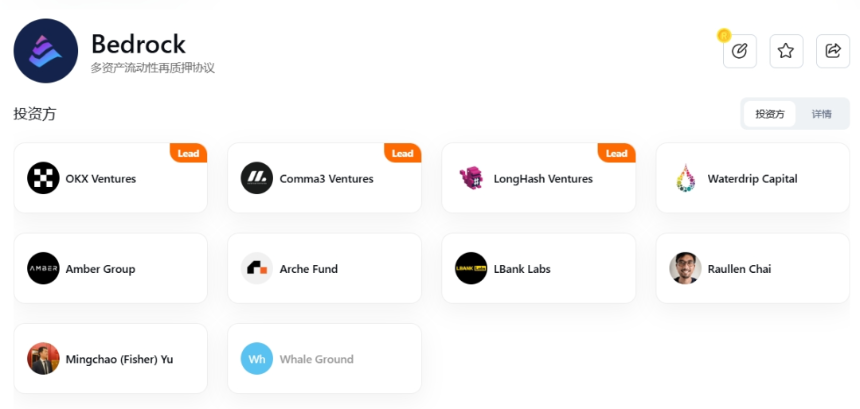
- Bedrock has secured investments from renowned institutions such as OKX Ventures, Waterdrip Capital, and Amber Group. On May 2, 2024, OKX Ventures announced it would lead the investment in Bedrock. OKX Ventures founder Dora Yue stated, “With the rapid development of DeFi, the total on-chain staking value has exceeded $93.4 billion, of which 48% comes from the liquidity restaking sector. Our investment in Bedrock aims to accelerate liquidity restaking solutions. We hope to provide diverse and secure asset management options for community users. We look forward to the gradual maturation and systematization of DeFi use cases, promoting the sustainable development of the Web3 industry.”
Operational Mechanism
- Bedrock utilizes uniBTC, supported by Babylon, for restaking. Users can stake wBTC on Babylon via the ETH chain, receiving a 1:1 certificate—uniBTC—in return for their wBTC. Users’ uniBTC can be redeemed for wBTC at any time. Babylon provides the core technical support. By staking wBTC and holding uniBTC, users can earn points from both Bedrock and Babylon. Through the collaboration with Babylon using uniBTC, Bedrock offers liquidity staking services to support Babylon’s PoS chain. Minting uniBTC ensures the stability and security of the Babylon PoS chain while further expanding Bedrock’s products to the BTC chain.
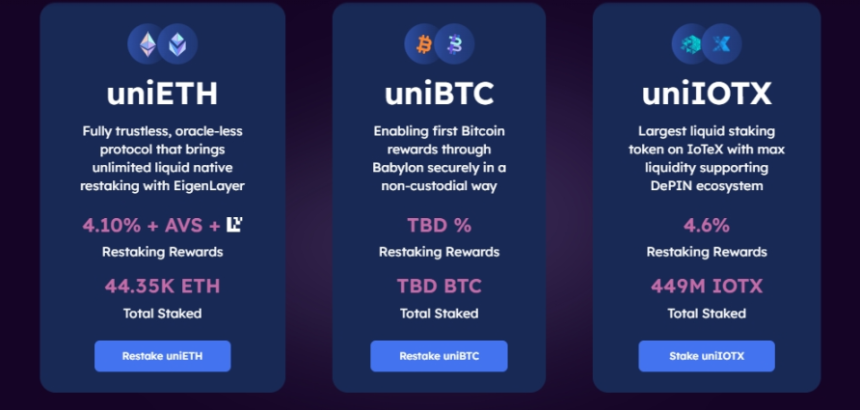
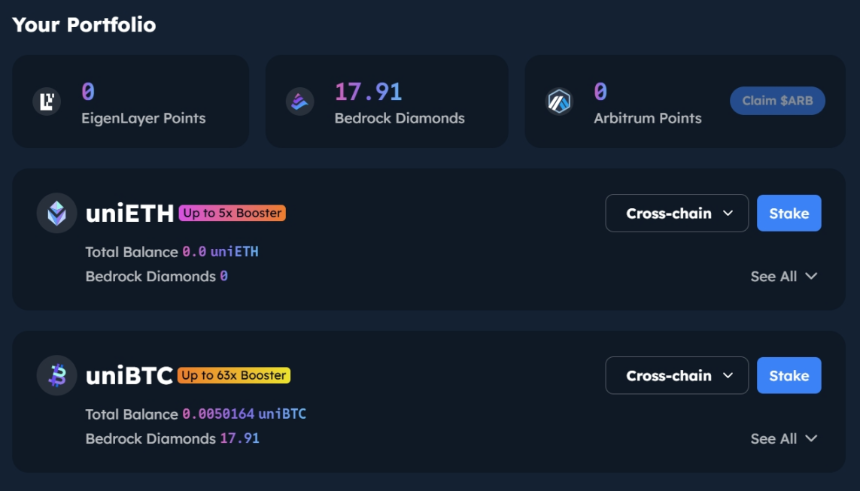
Source: https://www.bedrock.technology/
• From August 1 to August 7, 2024, Bedrock and Binance jointly launched a staking activity. Starting August 1st, users will receive 21x Bedrock Diamond rewards per coin per hour simply by holding uniBTC in their wallet, with an additional 3x boost for Binance Web3 wallet users.
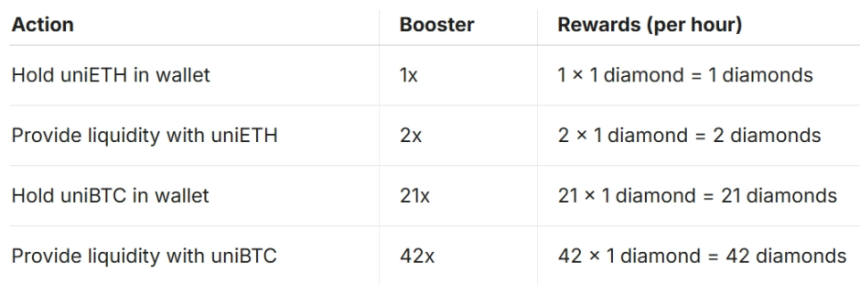
Source: https://docs.bedrock.technology/bedrock-lrt/bedrock-diamonds
- Decentralized Custody
- Recently, BitGO, the entity behind wBTC, announced that it would relinquish control over wBTC, sparking discussions in the market about the security of WBTC.
WBTC
- WBTC is the earliest and most widely used form of wrapped Bitcoin, bridging Bitcoin assets to the Ethereum ecosystem and utilizing Ethereum’s DeFi scenarios to unlock Bitcoin’s liquidity. However, this ERC-20 token form of wrapped Bitcoin poses issues of centralized management, leading to user concerns over asset security and transparency. MakerDAO voted to halt new lending against WBTC, resulting in the burning of over $30 million worth of WBTC within a week. Interest has increased in competing products like tBTC and Coinbase’s new product, cbBTC.
tBTC
- tBTC can be minted when crossing from BTC to ETH. Users can exchange WBTC for tBTC and subsequently redeem it back for native BTC, either securing it or continuing to use tBTC as collateral in DeFi. tBTC has a strong adoption rate in DeFi, with significant use cases in Curve Finance. Besides being actively traded in major stable and volatile pools, tBTC can also be minted into crvUSD stablecoin.
FBTC
- FBTC is a new type of synthetic asset that is 1:1 pegged to BTC and supports omnichain circulation of BTC. Initially, FBTC will be launched on ETH, Mantle, and BNB chains, with plans for expansion to more networks, allowing users to earn yield in DeFi scenarios with FBTC.
- Key advantages of FBTC include:
- FBTC will utilize multi-party computation (MPC) for custodial services.
- The minting, burning, and cross-chain bridging of FBTC are managed by a TSS (Threshold Signature Scheme) network operated by the FBTC Security Council and security firms.
- The proof of reserves for FBTC can be queried in real-time and is monitored and verified by security firms.
- Locked FBTC can be scheduled to access underlying BTC as collateral or participate in Babylon staking.
- It is built by well-established entities within the blockchain ecosystem and Bitcoin financial institutions, gaining the trust of numerous miners and builders.
- Governance tokens are used as incentives.
dlcBTC
- dlcBTC is a non-custodial representation of Bitcoin on Ethereum, enabling Bitcoin holders to participate in DeFi protocols while retaining full ownership of their assets. It employs discreet log contracts (DLCs) to lock Bitcoin in a multi-signature UTXO, with one key held by the user and another distributed across a decentralized network. The minted dlcBTC tokens can serve as collateral in various DeFi platforms (such as Curve and AAVE).
- Unlike wBTC and other bridged assets (like tBTC and BTC.B), dlcBTC locks Bitcoin on-chain while eliminating the need for intermediaries or custodians, prioritizing user sovereignty. dlcBTC is protected by the total hash power of the Bitcoin network, eliminating the need for users to send their Bitcoins to third-party deposit addresses.
- Compared to wBTC, dlcBTC has the following advantages:
- Self-wrapping: dlcBTC is self-wrapped by the depositor (dlcBTC merchant), locking BTC within the DLC. This self-wrapping means that the DLC can only pay the original depositor, thus preventing the theft of BTC during hacks or confiscation by government actions.
- Fully automated: Minting or burning wBTC can take 3-12 hours due to manual steps in the BitGo custodial process. In contrast, dlcBTC is fully automated and can complete minting or burning in 3-6 BTC block confirmations.
- Flexible fees: Since DLC.Link is not a custodian, dlcBTC incurs lower overhead, allowing for more competitive minting and burning fees.
- CeDeFi
Introduction
- CeDeFi is a financial service that combines characteristics of centralized finance (CeFi) and decentralized finance (DeFi). The conclusion of DeFi Summer prompted reflections on the urgent need for mechanism innovation to eliminate the hassles of manual operations and interactions with liquidity mining pools, while also breaking through the algorithmic limitations of underlying pools. Following Ethereum’s transition to PoS, Lido’s success has propelled an active asset management model that generates yield by staking native ETH to obtain stETH, thereby releasing liquidity while earning interest. In this process, users have shifted from directly interacting with liquidity pools to entrusting their assets to professional asset management institutions (centralized), which embodies the essence of CeDeFi.
- In the CeDeFi model, users lock Bitcoin in a third-party custodian’s independent over-the-counter settlement network, separate from exchanges. These Bitcoins are then mapped to tokens on the exchange at a 1:1 ratio. Users can utilize these tokens for various operations on CeDeFi platforms, such as conducting interest rate arbitrage trades between different markets. The actual Bitcoins are securely stored in a cold wallet isolated from the exchange. Only necessary fund flows occur between the custodian platform and exchange accounts, ensuring the security of user assets.
- As of June 13, 2024, approximately 28% of the total ETH supply is staked (33 million / 120 million), with about 29% staked through Lido (10 million / 33 million). This indicates that the liquidity of Bitcoin, valued in the trillions, remains unreleased, which is a clear impetus for the emergence of CeDeFi.
- The sources of yield in CeDeFi typically include fee arbitrage, staking rewards, restaking returns, and protocol-generated income (such as anticipated airdrops). Fee arbitrage refers to exploiting the differences in funding rates between CeFi and DeFi systems to engage in interest rate arbitrage trades for profit. CeDeFi arbitrage strategies combine the security of CeFi with the flexibility of DeFi, allowing users to arbitrage through delta-neutral interest rates.
Project 1: Solv Protocol
Overview
- The Solv Protocol is a unified liquidity matrix for Bitcoin, aimed at consolidating the fragmented trillions of dollars in Bitcoin liquidity through SolvBTC.
- Launched in 2021, it secured seed round funding and has since completed four funding rounds totaling over $11 million (including a strategic round from Binance Labs with undisclosed amounts). The project’s contracts have been audited by several reputable firms.
Operational Mechanism
- SolvBTC serves as the liquidity layer for Bitcoin and is currently live on Ethereum, BNB Chain, Arbitrum, and the Merlin Chain. As of July 16, 2024, the protocol has a total value locked (TVL) of 20,224 BTC, approximately $1.22 billion.
- By staking SolvBTC, users can earn either SolvBTC Ethena (SolvBTC.ENA) or SolvBTC Babylon (SolvBTC.BBN).
- SolvBTC Ethena utilizes Bitcoin as collateral to borrow stablecoins, which are then used to mint and stake USDe on Ethena. This process primarily generates returns from two main sources: financing obtained from Ethereum staking and Delta hedging derivatives positions. Additionally, users can earn token incentives from both Solv and Ethena.
- SolvBTC.BBN will not initially generate returns, but it is designed to prepare for the launch of Babylon’s mainnet, expected by the end of July. The allocation of 500 BTC for both the first and second epochs has already been claimed.
- Solv Protocol collaborates with digital asset custodians such as Copper, Ceffu, Cobo, and Fireblocks. These custodians provide “over-the-counter settlement” solutions, enabling Solv to delegate assets to centralized exchanges or withdraw them without transferring the actual assets.
- Technical Framework: The Solv technical architecture revolves around the Liquidity Verification Network (LVN), a framework designed to provide secure liquidity verification for digital assets, with a primary focus on Liquid Staking Tokens (LST). The first asset supported by LVN is SolvBTC. Currently, Solv Guard has been launched as the foundational security module of LVN, ensuring the integrity and security of all operations within the network by supervising and managing the permissions of asset managers.
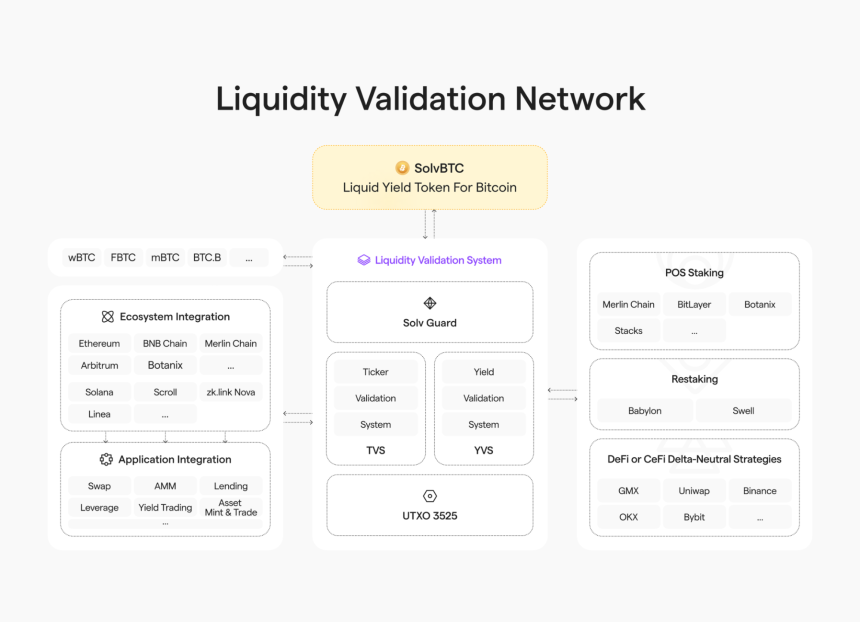
Source: https://docs.solv.finance/solv-documentation/getting-started-2/liquidity-validation-network
Project Progress & Participation Opportunities
- The Solv points system is currently operational and will serve as a reference for future airdrops.
- Total XP = Base XP + Boost XP + Referral XP
- Users can enhance their base points by staking (Base XP = (XP earned per dollar deposited) x (holding time)). Additionally, they can earn multipliers for Boost XP by reaching certain thresholds or participating in community activities.
- On July 16, the community announced that the third epoch of SolvBTC.BBN is set to launch.
Project 2: Bouncebit
Overview
- Bouncebit is a BTC restaking chain fully compatible with EVM, featuring a CeDeFi product design that utilizes Liquidity Custody Tokens (LCT) for restaking and on-chain farming.
- On February 29, 2024, Bouncebit announced the completion of a $6 million seed funding round, led by Blockchain Capital and Breyer Capital, with participation from CMS Holdings, Bankless Ventures, NGC Ventures, Matrixport Ventures, DeFiance Capital, OKX Ventures, and HTX Ventures. On the same day, OKX Ventures and HTX Ventures announced strategic investments in Bouncebit. On April 11, Binance Labs also announced an investment in Bouncebit.
Operational Mechanism
- Bouncebit utilizes Mainnet Digital and Ceffu’s MirrorX technology to implement regulated custody guarantees, mapping assets to exchanges and enabling BTC to earn yields within MPC wallets. The chain employs a mixed PoS mechanism combining BTC and Bouncebit for verification.
- Bouncebit supports the seamless conversion of pure BTC into more flexible forms, such as BTCB on the BNB Chain and Wrapped Bitcoin (WBTC). Users can deposit their BTC into secure custody services accessible via EVM networks, thereby bridging these assets to the Bouncebit platform. This process allows for the accumulation of on-chain yields without direct interaction with the Bitcoin main chain.
- The Bouncebit CeDeFi ecosystem offers users three types of returns: original CeFi yields (arbitrage), node operation rewards for staking BTC on the Bouncebit chain, and opportunity yields from participating in on-chain applications and Bounce Launchpad (DeFi yields within the on-chain ecosystem).
- User contributions to TVL are securely managed by Mainnet Digital’s regulated custody services, ensuring compliance and security. These assets are then mirrored through Ceffu’s MirrorX service, providing users with BBTC/BBUSD.
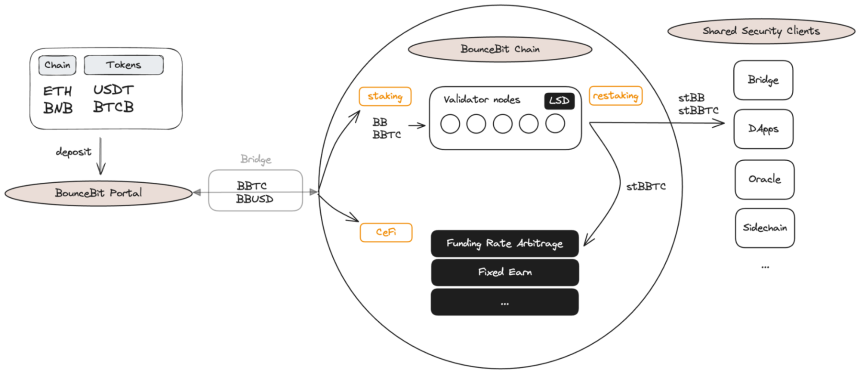
Source: https://docs.bouncebit.io/cedefi/bouncebit-cefi-+-defi/infrastructure
Project Progress
- The mainnet was launched in May, and as of July 16, the market capitalization of $BB is $201 million, with a fully diluted valuation (FDV) of $968 million and a mainnet TVL of $310 million.
Project 3: Lorenzo Protocol
Overview
- Lorenzo is a BTC liquidity finance layer based on Babylon.
- On May 21, the BTC liquidity finance layer project Lorenzo announced an ecological strategic partnership with the Bitcoin Layer 2 project Bitlayer. Lorenzo will launch a Beta version on Bitlayer, allowing users to stake BTC and use the liquidity staking token stBTC generated from staking to earn additional rewards on Bitlayer.
Operational Mechanism
- Lorenzo tokenizes staked Bitcoin into Liquidity Principal Tokens (LPT) and Yield Accumulation Tokens (YAT) for each staking transaction. It also provides the infrastructure for swapping LPT and YAT, allowing users to realize their staking rewards.
- Lorenzo matches users who stake BTC with Babylon and converts the BTC staked in Babylon into liquidity staking tokens, releasing liquidity to the downstream DeFi ecosystem. The architecture of Lorenzo consists of a Cosmos app chain built using Cosmos Ethermint, a relay system that synchronizes BTC L1 with the Lorenzo app chain, and a system responsible for issuing and settling BTC liquid staking tokens.
- As of July 16, 2024, the TVL stands at $70 million.
- DEX AMM Swap
Introduction
- DEX AMM Swap (Decentralized Exchange Automated Market Maker Swap) is a decentralized trading mechanism that operates on the blockchain. It utilizes algorithms and liquidity pools to automatically provide liquidity for trading pairs without the need for a centralized order book. Users can directly swap tokens on-chain, enjoying a trading experience with low slippage and low fees. The AMM model significantly enhances the liquidity and usability of DEXs and is a vital infrastructure within the DeFi ecosystem.
- The development of DEXs in the Bitcoin ecosystem has lagged behind that of other smart contract-supporting chains, primarily due to the design intent and technical limitations of the Bitcoin network.
- Technically, AMM (Automated Market Maker), PSBT (Partially Signed Bitcoin Transactions), and atomic swaps provide the technological foundation for implementing DEXs on Bitcoin. AMMs manage liquidity pools through algorithms, enabling automated pricing and trade execution; PSBT allows for the step-by-step construction of complex transactions and multi-party participation, enhancing flexibility and security; atomic swaps facilitate trustless exchanges of cross-chain assets, with their core mechanism being Hash Time-Locked Contracts (HTLCs).
Project 1: Bitflow
Overview
- Bitflow focuses on sustainable BTC yield, utilizing technologies such as PSBT, atomic swaps, and AMM, along with Layer-2 solutions like Stacks for trading BTC, stablecoins, and more.
- On January 25, 2024, Bitflow announced the completion of a $1.3 million pre-seed funding round, led by Portal Ventures, with participation from Bitcoin Frontier Fund, Bitcoin Startup Lab, Big Brain Holdings, Newman Capital, Genblock Capital, Tykhe Block Ventures, and others. Co-founder Dylan Floyd serves as CEO, having previously worked as a software engineer at AT&T and graduated from Georgia Tech. Another co-founder, Diego Mey, is the CSO and founding partner of Bussola Marketing Group, with prior experience in business development at Wicked Studios.
Operational Mechanism
- Bitflow is positioned as a DEX (Decentralized Exchange) built on Stacks. According to DefiLlama data, Bitflow’s current TVL is $18.27 million. The project aims to earn native BTC yields without introducing custodial risks. Users can provide liquidity in the liquidity pool to earn returns, primarily in stablecoins like USDA, STX, stSTX, and BTC (supported after the Nakamoto upgrade on Stacks).
- Another goal of Bitflow is to build BTCFi. With Bitflow’s StableSwap, not only stablecoins but also xBTC, sBTC (both are wrapped BTC on Stacks), and native Bitcoin assets can seamlessly integrate into the Bitflow ecosystem. sBTC represents a 1:1 peg to Bitcoin on Stacks and operates under a fully decentralized framework, overseen by a group of open-member signers. xBTC is a wrapped version of Bitcoin issued on Stacks, backed 1:1 by Bitcoin held in reserve, similar to Wrapped Bitcoin on the Ethereum network.
Project Progress & Participation Opportunities
- Bitflow has launched its AMM DEX mainnet, which currently supports multi-hop trading. Additionally, Bitflow’s RUNES AMM is in development, and users can sign up for the waitlist on the official website. The $BFF token is set to launch soon, with updates to follow.
Project 2: Dotswap
Overview
- Dotswap is a native AMM DEX on the BTC mainnet, supporting assets such as Runes, BRC 20, ARC 20, and the latest CAT 20. The mainnet went live in September 2023 and has since been updated to version 3. As of September 25, 2024, the total trading volume has reached 1,770 BTC, with a TVL close to 60 BTC.
Operational Mechanism
- Upgraded Multisignature: The liquidity pools of Dotswap are supported by the MMM (Multilayered Multisig Matrix), an upgraded multisignature framework that integrates the advantages of MPC and Bitcoin’s native multisignature.
- Non-custodial, permissionless atomic swaps: Utilizes PSBT technology.
Project Progress
- In Q3 2024, Dotswap introduced new tools: the Rune Minting Machine and a multifunctional BTC Trading Accelerator. The accelerator, originally called BTC-Speed, optimizes BTC transaction times by utilizing Child Pays for Parent (CPFP) methods. The Rune minting/etching feature boasts zero fees and offers three different minting modes.
Project 3: Unisat AMM Swap
Overview
- Unisat is a wallet application focused on Ordinals and brc-20, utilizing an order book to facilitate trading in the inscription market (including Ordinals, brc-20, and Runes), which differs from typical AMM-based DEXs.
- Unisat completed a strategic funding round in February 2024 and followed up with a Pre-A round led by Binance in May.
- At the end of May, Unisat began airdropping pizza inscriptions. On September 9, the Fractal mainnet, developed by the Unisat team, officially launched, solidifying its status as a leading player in the inscription space.
Part Three: Comparison of Different Asset Classes
Comparison of Security
- The BTC ecosystem places a significantly higher emphasis on “security” compared to other ecosystems, which is determined by the characteristics of BTC holders. From the storage of funds in wallets to the specific steps in participating in financial infrastructure (FI), security guarantees are essential, with a particular focus on the effective control of “asset ownership.”
- Ethereum is the largest Proof of Stake (PoS) blockchain by total staked value. As of August 2024, ETH holders have staked over $111 billion worth of ETH, accounting for 28% of the total ETH supply. The amount of staked ETH is referred to as Ethereum’s security budget, as stakers face network penalties for violating protocol rules. While ETHFi has birthed a vast ETH ecosystem, it has also introduced systemic risks to ETH itself, including risks of excessive centralization and run risk. Since the security of PoS is determined by the value of staked coins, any run risk or validator exit can result in a downward spiral, diminishing PoS security. In a bear market, falling token prices may reduce gas fees, potentially causing ETH to experience inflation and further price declines. Finally, “51% attacks” pose another security issue for ETH; if ETH validators control over 50% of governance rights, they can easily manipulate and attack the network.
- The total TVL of the Solana ecosystem reached $4.86 billion on July 17, 2024. Although this still lags behind Ethereum’s $59 billion, Solana has slightly surpassed BSC and is currently ranked third, just behind Tron. Solana also operates as a PoS blockchain, and its security logic is similar to that of Ethereum. It is worth noting that Solana is subject to more external factors, making its token price more susceptible to fluctuations compared to Ethereum. For instance, in April of this year, Solana experienced network congestion due to memecoin and Ore mining activities.
- Given that BTC operates on a Proof of Work (PoW) system, it theoretically should not face these issues. However, if risks from multiple financial protocols accumulate and create systemic risk, it could lead to a significant drop in BTC prices, adversely affecting the market’s bull and bear trends. This scenario is particularly unfavorable for BTCFi, especially as it is still in its early development stages and could “fail to thrive,” requiring more time for acceptance.
Comparison of Yields
- There are various sources of yield tailored to different product application scenarios. Generally, these include staking rewards, DeFi product yields, and the yields generated by the protocol itself.
- Staking Rewards: For example, Babylon proposes using BTC as a guarantee for the security of PoS chains, thereby generating staking rewards.
- DeFi Product Yields: Such as the arbitrage yields involved in Solv products or yields generated from lending protocols.
- Protocol Yields: Referring to the gains arising from the protocol’s token price appreciation or its expected token issuance.
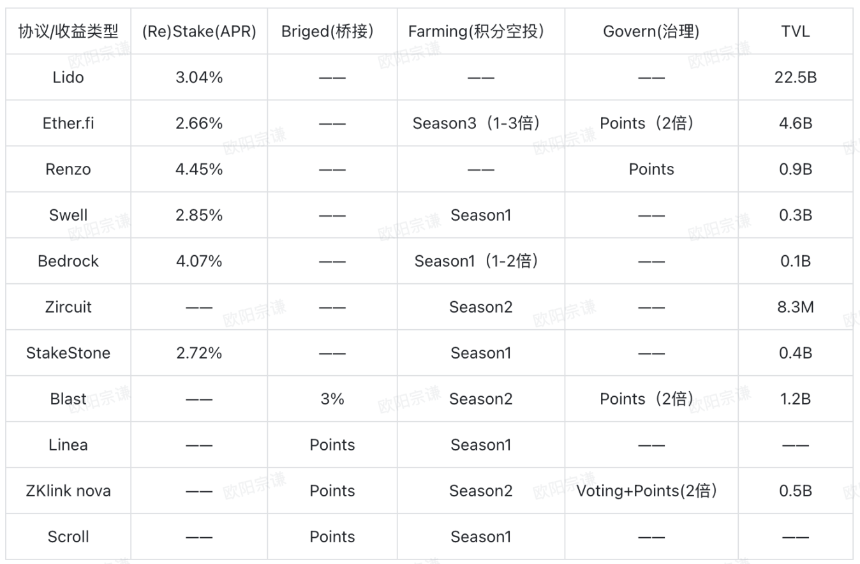
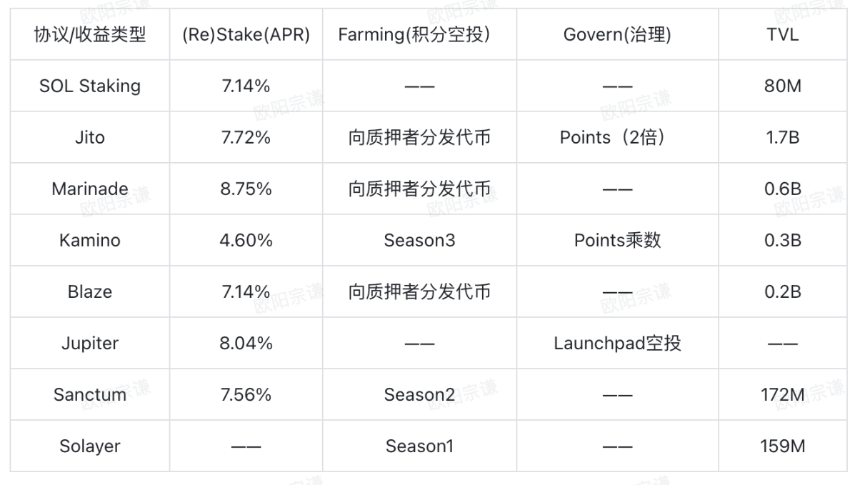
- The following are comparisons of yields and yield sources among major projects/protocols in ETHfi, SOLfi, and BTCfi.
- Current Yields and Sources of Yield for Popular ETHfi Protocols:
○ SOLfi’s current yields and sources of income for various popular protocols:
○ BTCfi’s current yields and sources of income for various popular protocols:
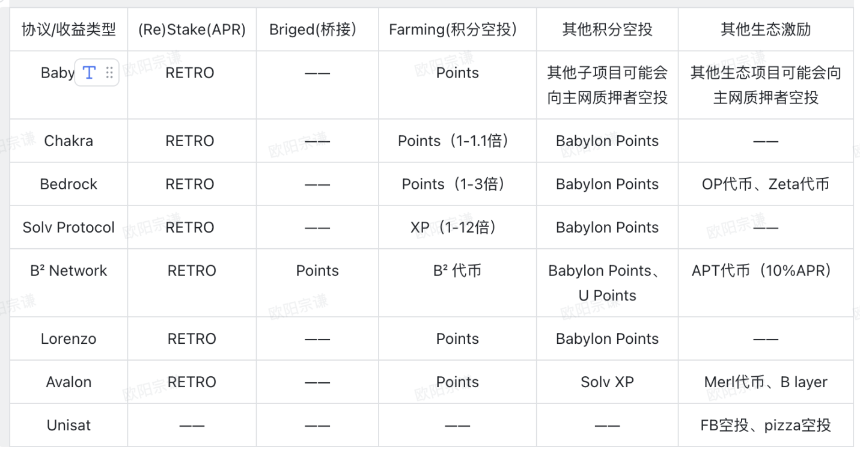
Note: The RETRO in the table refers to the fact that Babylon’s APR has not yet been calculated, and the APR of other projects depends on Babylon, so estimates are not provided here. In addition, Binance, OKX, HTX, and others have collaborated with Babylon, Chakra, Bedrock, B², Solv Protocol, and other projects to conduct a series of pre-staking and farming activities, allowing users to achieve significant returns, particularly from the staking activities associated with Binance’s Web3 wallet.
- From a macro perspective, BTCFi has greater potential compared to ETHFi and SolFi, as the latter two have already surpassed the first stage of explosive TVL growth, while BTCFi remains an untapped market. From this perspective, BTCFi products are expected to offer higher yield potential.
Ecological Diversity
- The Ethereum ecosystem includes DeFi, NFTs, RWAs, and Restaking. Traditional top projects such as Uniswap, AAVE, LINK, and ENS have seen further growth in real user adoption and effective usage frequency. Since 2023, many Ethereum liquid staking/restaking protocols like Lido and EigenLayer have attracted substantial capital.
- On Solana, the total TVL of DEX Raydium and the liquidity solution Kamino Finance is close to $1 billion, making them two leading projects in the Solana DeFi ecosystem. Following them in terms of TVL are Jupiter, Drift, Marginfi, and Solend. Solana is also a PoS blockchain, with most of its funds concentrated in Liquid Staking, led by projects like Jito.
- For BTCFi, it is crucial to consider the asset categories and TVL in the financial infrastructure (FI) space. According to data from CryptoCompare and CoinGecko, the BTCFi market size reached approximately $10 billion in 2023. This figure includes the total locked value (TVL) of Bitcoin in the decentralized finance (DeFi) ecosystem, as well as the market size of financial products and services related to Bitcoin. The increasing number of BTC holders signifies an influx of new user groups and capital, and the approval of ETFs has propelled BTC into a super bull market, further increasing the number of new wallets holding BTC on-chain.
- In addition to Bitcoin itself, there are already a variety of asset types participating in BTCFi. For example, layer one assets based on the BTC network, such as inscriptions and runes; layer two assets based on the BTC network, like RGB++ and Taproot assets; wrapped/staked assets such as WBTC on the ETH chain and various LST or LRT certificates representing staked BTC. These assets enhance the liquidity of FI, expanding its reach and enriching future FI scenarios.
- In terms of protocols and ecosystem projects, the Bitcoin ecosystem is currently experiencing explosive growth, with numerous projects emerging, including Layer 2 initiatives. Venture capital financing is increasing, drawing market attention. For example, projects like Merlin and Bouncebit are focused on the BTC Layer 2 network; lending protocols such as BlockFi and Celsius Network; stablecoin protocols like Satoshi Protocol and BitSmiley; staking protocols such as Babylon and Pstake; and restaking protocols like Chakra and Bedrock.
Conclusion
In today’s fast-paced digital age, as global institutions and tech giants join the blockchain race, the number of public chains and their complexity continues to grow. Yet, Bitcoin (BTC) retains its unique status—1 BTC always equals 1 BTC. Its value has endured, proving its potential as a long-term appreciating asset. Far from being just numbers or code, BTC is a highly liquid, practical asset with distinct advantages, whether simplifying cross-border transactions, enabling electronic payments, or supporting various financial applications.
Investor demand for BTC liquidity is on the rise, and developers are exploring its programmability to unlock more of its potential. BTCFi has emerged to meet this need, enhancing liquidity and breathing new life into the BTC network by expanding its use cases. As the BTCFi ecosystem evolves, we’re seeing healthy competition among protocols, which not only mitigates centralization risks but also drives the broader Bitcoin ecosystem toward maturation and diversification.
Looking ahead, BTCFi will remain a driving force for innovation in the crypto-financial landscape, pushing the Bitcoin network towards more sophisticated financial applications and greater global adoption. With ongoing technological advancements and a growing market, BTCFi is poised to become the bridge between traditional finance and the crypto world, offering global users richer, safer, and more efficient financial services.
Disclaimer:
- This article is reprinted from [Waterdrip Capital]. All copyrights belong to the original author [Freya、Knight,Ausdin,ZJUBCA;Elaine、Youyu,Satoshi Lab]. If there are objections to this reprint, please contact the Gate Learn team, and they will handle it promptly.
- Liability Disclaimer: The views and opinions expressed in this article are solely those of the author and do not constitute any investment advice.
- Translations of the article into other languages are done by the Gate Learn team. Unless mentioned, copying, distributing, or plagiarizing the translated articles is prohibited.